
When light becomes an enemy
Outdoor lighting has grown exponentially in recent decades: streets, gardens, parking lots, public and private buildings are increasingly lit, often without any real design criteria. The result? Cities that never sleep, night skies gone, and a light that, instead of improving the quality of life, ends up damaging it.
Light pollution is today one of the least perceived forms of pollution, but also among the most widespread. Upward-scattered light, glare, excessively cold color temperatures, and oversized systems turn outdoor lighting into a continuous energy waste and a real environmental problem.
The consequences we often ignore
When lighting is not sustainable, the impact goes far beyond aesthetics.
- Environment and biodiversity: many animal species depend on the natural cycle of light and dark. Excess artificial light alters the biological rhythms of insects, birds, and nocturnal animals, with direct effects on ecosystems.
- Human health: nighttime exposure to bright or too cold lights can interfere with circadian rhythm, affecting sleep and psychophysical well-being.
- Energy waste: light that illuminates the sky instead of the ground is paid and completely useless energy.
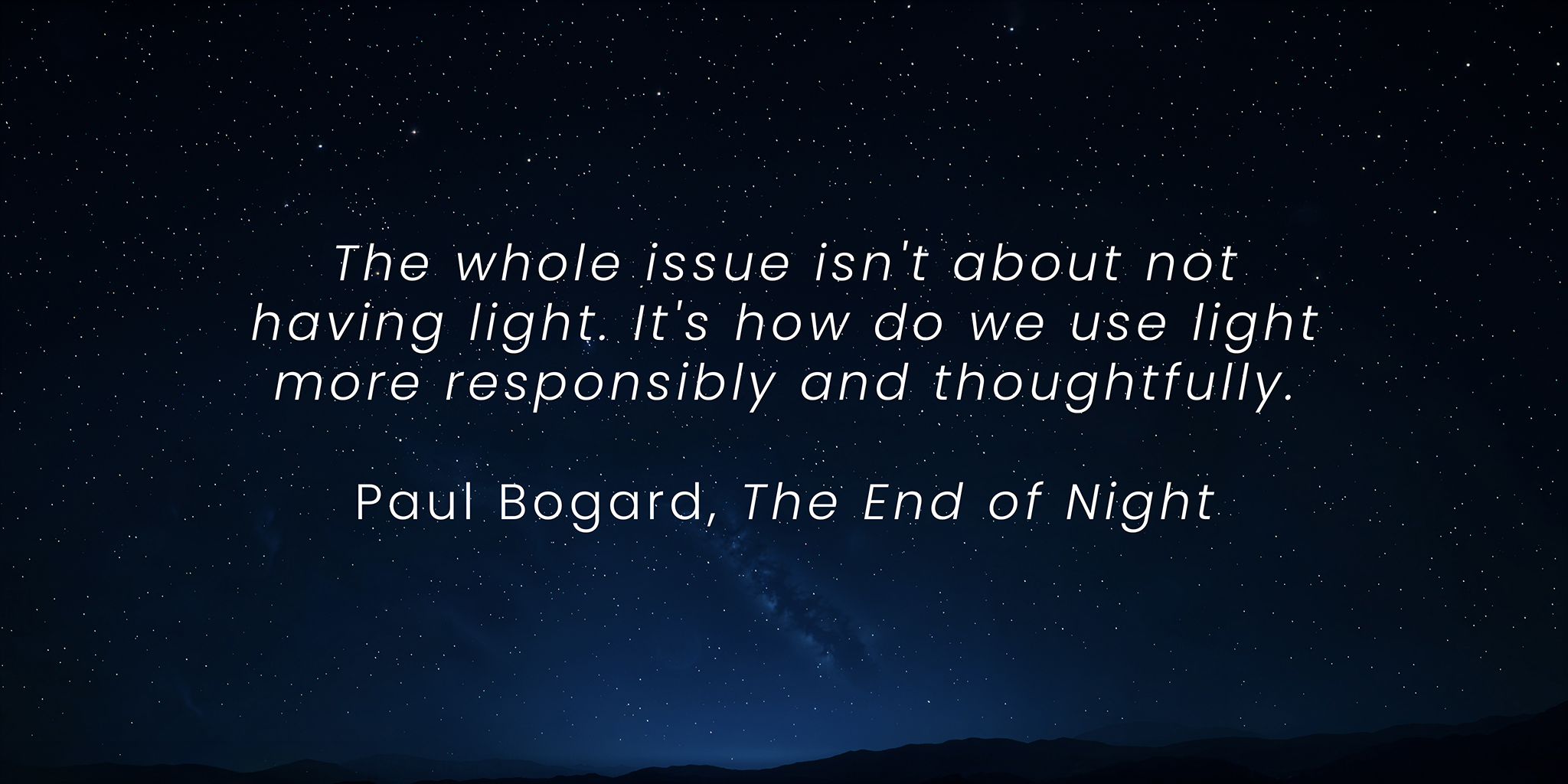
- Loss of the starry sky: for many people, seeing the Milky Way is now a rare experience. A natural and cultural heritage that is in danger of disappearing.
Continuing to illuminate “more” does not mean illuminating “better”. And this is where the need for a change of approach arises.
Sustainable outdoor lighting and the Dark Sky movement
The solution, therefore, is not to turn off the lights, but to design them intelligently. The key principle is simple: the right light, in the right place, only when needed.
The Dark Sky movement represents one of the most concrete references in this area. It promotes lighting solutions that reduce light pollution, improve efficiency and respect the night environment.
The pillars of sustainable outdoor lighting are:
- Total directionality (full cut-off): the light must be directed downwards, avoiding scattering towards the sky and lateral glare.
- Warm color temperature: preferring shades below 3000K reduces the impact on the environment and health.
- Controlled amount of light: illuminate only what is needed, without excess.
- Control systems: motion sensors, timers and dimming allow you to use light only when you really need it.
- Mindful design: each space has different needs and requires a targeted lighting study.
Choosing certified appliances and relying on careful design means obtaining safe, functional and aesthetically enhanced outdoor spaces, while at the same time reducing consumption and environmental impact.
A new way of living at night
Investing in sustainable outdoor lighting means looking to the future with responsibility. It means protecting the night sky, improving the quality of life, and turning light into a tool for balance, not disturbance.